
I get commissions for bookings and purchases made through links in this post, at no extra cost to you. How this works
In this guide
- St. Augustine weather and crowds by month
- Winter: December through February
- Spring: March through May
- Summer: June through August
- Fall: September through November
- If you’re coming during hurricane season
- What to pack for each season
- Weekday or weekend?
- The best time to visit, based on what you want
- Before you book
People always want one answer to this, so here’s mine: late October. The worst of the heat is gone, the water’s still warm enough to swim in, and storm season is winding down. But the right month really depends on why you’re coming.
If it’s the lights, come in December or early January, on a weeknight. If it’s the beach, come in May or October. If it’s the old city, I’d come almost any time but the middle of summer. Here’s how the year breaks down.
St. Augustine weather and crowds by month
The temperatures, water and rain days are typical averages. The crowd notes are my own read on the year, so they’re a guide, not a count.
| Month | High / low °F | Water °F | Rain days | Crowds | Go for |
|---|---|---|---|---|---|
| Jan | 66 / 46 | 66 | 8 | Quieter after the holidays | Cheap rooms and no lines, once Nights of Lights ends Jan. 18 |
| Feb | 68 / 46 | 66 | 8 | Fairly quiet | Walking the old city in a light jacket |
| Mar | 73 / 52 | 64 | 8 | Busy, with spring break | Warm days and mostly dry weather |
| Apr | 81 / 59 | 68 | 6 | Busy | Blooms and the fewest rain days of the year |
| May | 84 / 64 | 75 | 8 | Very busy | Beach weather before the rainy season |
| Jun | 90 / 70 | 79 | 13 | Busy at the beach | Warm water and summer family trips |
| Jul | 90 / 73 | 82 | 15 | Busy at the beach | Early mornings and long beach days |
| Aug | 90 / 73 | 82 | 15 | Starts to thin out | Deals, if you can handle the heat |
| Sep | 88 / 72 | 82 | 13 | Quiet | Deals and free music, with the most storm risk |
| Oct | 81 / 64 | 77 | 8 | Picks back up | The best mix of weather and water |
| Nov | 75 / 55 | 72 | 7 | Picks up at Nights of Lights | Cooler walks and the start of the lights |
| Dec | 68 / 48 | 68 | 7 | Very busy on weekends | Nights of Lights and a town dressed for Christmas |
Winter: December through February
This is when the town looks its best at night. Nights of Lights runs from Nov. 21, 2026 to Jan. 18, 2027, and the old city is lit up for all of it. It’s also the driest stretch of the year, with clear, crisp days. Days usually land in the high 60s, but a cold front can drop mornings into the 30s, so pack layers. You’ll also see plenty of snowbirds around town, and I can’t blame them.
December weekends are the busiest part of the season. If you can come on a Monday through Thursday, do it. The Regatta of Lights is on Dec. 12, 2026, when decorated boats parade along the bayfront. If you’d rather watch from the water, Florida Water Tours runs a Regatta of Lights cruise from Camachee Cove, listed at $59 for adults and $49 for ages 5 to 12. I’d book early and confirm it’s running this year. Once the lights end, late January and February get quiet, and those are some of my favorite weeks to walk around downtown. You won’t want to swim, though.

Spring: March through May
Spring has the weather most people picture when they think of Florida. It’s warm and mostly dry, and April has the fewest rain days of the year. It’s also when everybody else shows up. Spring break fills the town in March, and May is one of the busiest months here.
The water catches a lot of people off guard. It’s still in the 60s through April, so early spring is better for walking the beach than swimming in it. By May, it’s more comfortable. May is also when lovebugs tend to show up, and they’ll be all over your windshield on the drive in. They’re harmless, just annoying, and they come back around September. Romanza Festivale, two weeks of mostly free music and arts events, is set for May 2027, with exact dates still to come. Book your room and your dinners early for any spring weekend.
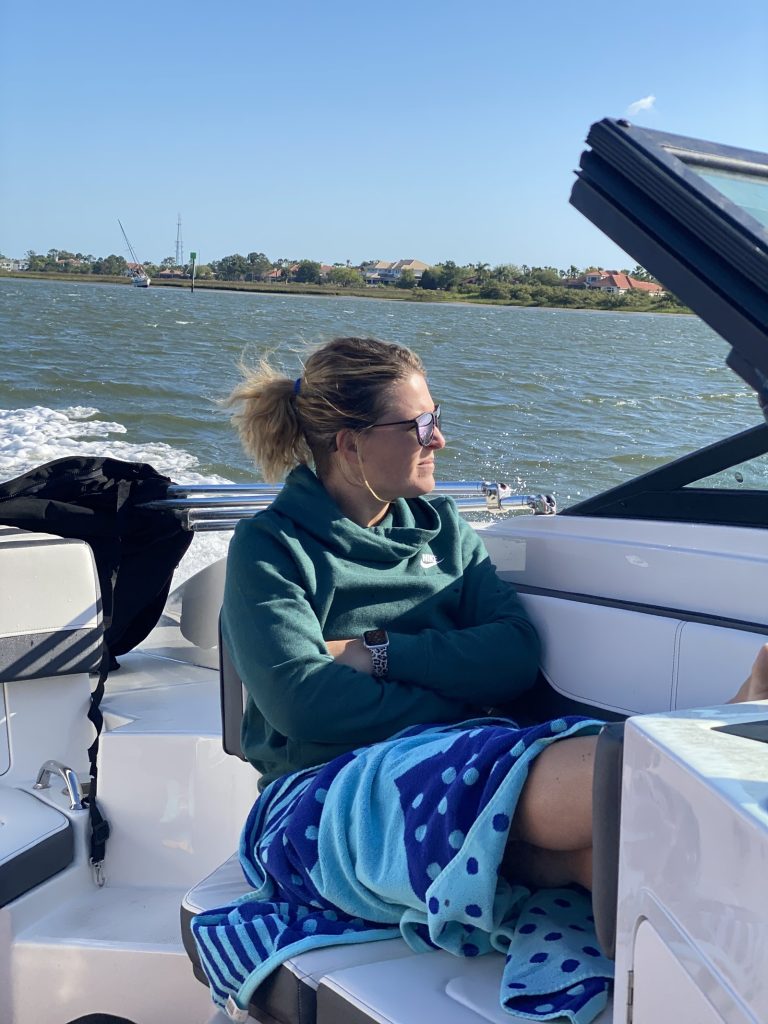
April is boat weather, but dress for the wind. It can feel warm on land and a lot cooler once the boat gets moving. My wife was in a hoodie with a beach towel over her legs for this ride on April 3, and she was glad to have both. Bring a layer, even if it feels like shorts weather at the dock.
Summer: June through August
Summer is hot. Highs sit around 90, it’s humid, and you can expect rain on about half of the days. The storms usually come in the afternoon and pass quickly, so they don’t have to ruin your day. They’re just something to plan around. They tend to build inland and often miss the beach, but if you hear thunder, get off the sand.
The good news is that the ocean’s warm, and this is when families come for long beach trips. I’d do my walking first thing in the morning, hit the sand until the clouds build, and save the afternoon for something indoors. Hotel deals get easier to find as you get into August. Bring water everywhere, especially on a tour of the Castillo, where there isn’t much shade.
Fall: September through November
September is the wild card. It’s the wettest month, and it’s right in the middle of hurricane season, which officially runs from June 1 to Nov. 30 and peaks around Sept. 10. It’s also one of the best times to find a deal. And Sing Out Loud, with more than 100 free performances, brings nearly a month of music to town.
October is when things really turn. The heat starts to break, rain days drop to about 8, and the water’s still in the 70s. November is cooler and calmer, with highs in the mid-70s, until the lights come on just before Thanksgiving. If you come that week, book early.
If you’re coming during hurricane season
I wouldn’t avoid St. Augustine for six months over this. Most trips during the season go off without a problem. Still, people here take storms seriously. Locals still talk about the flooding from Matthew in 2016 and Irma in 2017. But from late August through early October, I’d book with some flexibility.
- Choose refundable rates when you can, and read the cancellation rules before you pay.
- Check the forecast at the National Hurricane Center about a week before you leave.
- Listen to local officials if a storm does head this way, especially on Anastasia Island and at the beach.
- Consider travel insurance for an expensive trip, and check what it covers before you need it.
What to pack for each season
- Winter: A real jacket for the evenings, especially on the water or the Bridge of Lions. It can feel a lot colder than the number on your phone once the wind picks up.
- Spring: Layers, sunscreen and comfortable shoes. A warm afternoon can still turn into a cool night in March.
- Summer: A hat, a water bottle, bug spray and a light rain jacket. Skip the umbrella if you can, since it’s just one more thing to carry around all day.
- Fall: Summer clothes through October, plus a light layer for November nights.
Weekday or weekend?
This matters almost as much as the month. A Tuesday in a busy month can feel calmer than a Saturday in a slow one, and it’s easier to get a dinner table or a parking spot. If you have any choice, come Sunday through Thursday. Keep an eye on holiday weekends and big local events, because they can fill the town up at any time of year.
The best time to visit, based on what you want
- Fewest crowds: September, or late January through February.
- Best beach weather: May and October.
- Warmest water: July through September.
- Best deals: late summer and September, if you’re OK with the storm risk.
- Prettiest nights: Nights of Lights, on a weeknight.
- A first trip: February through April, or October through early November.
Before you book
Once you have your dates, see where I’d stay, how I’d spend a weekend and which beach I’d pick. If you’re driving in, my parking guide will save you some circling.
Paid link: bookings through this map earn a commission.
Want the short version? My free 8-page guide has a two-day plan, parking, restaurant picks and a beach map. Get the free weekend guide.
Details were checked on Nov. 3, 2026. Weather figures are typical averages, not a forecast, and event dates can change, so confirm before you go.